

I Thought I Didn’t Come From a Business Family. I Was Wrong.
I thought I didn’t come from a business family. Turns…


Before search engines, we had libraries.
Walk into the non-fiction section. Thousands of books. No chaos. No “ranking hacks.”
Just structure.
The Dewey Decimal System didn’t care what question you were asking. It cared about classification. It created a standardized taxonomy so that all knowledge could be found, browsed, and retrieved.
You didn’t start with a keyword.
You started with a topic.
Aviation.
Then Aviators.
Then Pioneer Aviators.
Your search phrase might have been:
“Who was the aviator who circumnavigated the world solo?”
But that wasn’t the topic.
It was a query.
And that distinction matters more today than most SEOs realize.
Somewhere along the way, the industry blurred the lines between:
We treated them as interchangeable.
They’re not.
A topic is structural.
A query is behavioral.
Keywords are linguistic.

When you build content around keywords, you’re reacting to behavior.
When you build content around topics, you’re constructing knowledge.
That’s a different game entirely.
This isn’t about being pedantic. It’s about survival.
Every major Google update follows the same pattern:
And every time, the sites that survive have the same characteristics:
Not tricks.
Structure.
The industry throws around “topical authority” like it’s a synonym for “write more content.”
It’s not.
If we strip the buzzwords away, topical authority is this:
The structured demonstration that you are qualified to author within a defined knowledge taxonomy.
Not keyword dominance.
Not traffic volume.
Authorization through clarity and verification.
If your content sits inside a well-defined hierarchy, and your claims are backed by proof, search systems can understand you. AI systems can cite you. Users can trust you.
Without structure, even good content floats.
Here’s something we see constantly.
Businesses try to build “topical depth.” They publish 15 articles targeting variations of the same phrase. Same intent. Same angle. Slightly different wording.
Then they wonder why rankings stall.
You didn’t build depth.
You built internal competition.
The problem isn’t content volume. It’s taxonomy confusion.
When structure is wrong at the top level, everything underneath eventually collapses into overlap.
Fix the taxonomy and half the SEO “issues” disappear.
Good. This is the core.
This isn’t “SEO advice.”
This is a reframing of what SEO actually is.
Let’s tighten it. Sharpen it. Make it thought-leadership level.
ALTC – Authority-Led Topic Clusters – is our framework for building structured topical authority:
Traditional SEO starts here:
“What do people search for?”
ALTC starts here:
“What do we want to be known for?”
That inversion isn’t semantic.
It’s structural.
And structure is everything.
If your known-for positioning is The Strategic Content AI-First Web Designer, then every topic – Analytics, SEO, CRO, infrastructure – is filtered through that identity
There are decisions that happen before an article ever exists.
Most businesses skip them.
That’s why they chase their tail. And content canabalises.
These are your content clusters,
A lens is your primary framing – the consistent angle you apply across your topics.
If you’re a wedding planner, your lens might be ‘sustainable celebrations’ or ‘micro-budget luxury.’
Not a subtopic. Not a keyword.
A strategic filter that shapes how you talk about everything from venues to catering.
(Jumping ahead to topics for a second,) You apply the lens to the primary topic of the content you are writing about on that page.
For example, take the topic Analytics.
You don’t just write about analytics generically. You frame it:
Same topic. Different authority signals. (AND different search intents)
Over time, this creates a recognisable pattern.
That consistency is what makes you citable.
Frame first. Then everything else.
*Refer to complexity filter for help with strategic lens identification, less content saturation/less competition less lenses(1-2) High competition high saturation more (3-4)
Built topical
If your known-for positioning is The Strategic Content AI-First Web Designer, then every topic – Analytics, SEO, CRO, infrastructure – is filtered through that identity and then framed through your selected clusters/lens

These are not content clusters. They’re independent knowledge domains – like sections in a library. The Topic “SEO” doesn’t cluster with “Analytics”. They’re separate taxonomic categories
Within EACH topic, you build
Topical maturity = comprehensive coverage at appropriate maturity levels.
You expand topical authority by:
Topical Authority should be thought of as a Taxonomy. Knowledge domains. Not keywords.
What are the top-level knowledge categories you’re claiming authority within?
Like Dewey Decimal. Clean. Neutral. Structural. – strategic topical territories.
This is what is completely missing from SEO.
Content Maturity.
And I don’t mean readability – If you’re claiming to be an Expert or a Thought Leader but producing Entry level content, you create cognitive dissonance.
Maturity is:
ALTC forces you to target the maturity level before you write.
That decision alone eliminates 80% of generic content.
Maturity isn’t about dense, academic writing. Thought leadership content can be clear, readable, and accessible – maturity is about the depth of insight, not the complexity of language
But even here, we don’t jump to keywords.
We can validate against keyword volume – but what we really should be looking at next is search intent, (not keyword volume/search difficulty).
That’s a critical distinction.
Search Intent isn’t a number. It’s a pattern of human problems.
Take this search input
“need help sorting my special day, its 8 weeks away, ive not done anything, who can help”
No “wedding.”
No “event planner.”
No “hire.”
Google SERP may return event planners, party coordinators, or generic venues.
AI models cut through the ambiguity and infer wedding planning. Why? Because AI interprets context and entity relationships, not keyword matching.
The Search Intent was “Find me a Wedding planner”
And deeper Search Intent Targeting might look like this
Traditional kw target would be “Wedding planner” / “wedding coordinator”
Intent-first topical authority is proactive. And helps you speak to the searches actual problem – before keywords is part of the future proofing
Keyword tools measure historical phrasing.
AI measures semantic intent.
Volume will become less relevant because:
Chasing keyword volume is like running a race from the finish line back to the start.
It’s reactive.
Topical Authority is built from maturing your coverage (breadth) at appropriate maturity levels (depth)
That’s the real hierarchy.
This isn’t just a content strategy framework. It’s a prevention system.
When you know your Positioning, you can’t drift into off-brand topics. When you define your Topics (not keyword clusters), you can’t accidentally cannibalize. When you map Subtopics, you know where the gaps are. When you target Maturity levels, you avoid generic content. When you identify Intent, you stop chasing vanity keywords.
Structure first. Everything else follows.
And here’s the best part: you don’t need keyword research anymore.
Not the way you used to do it.
No exporting 1,000 keywords from Ahrefs. No spending hours trying to group them into clusters. No debating whether ‘best SEO tools’ and ‘top SEO software’ belong in the same cluster or need separate pages.
It literally doesn’t matter. It becomes redundant.
When you structure content around topics, subtopics, and intent, the keywords take care of themselves. They appear naturally because they’re the language of the domain.
You’re not avoiding keyword research because it’s wrong. You’re skipping it because it’s solving a problem you don’t have.
When your structure is clear, keywords are a byproduct, not a target.
Tools like SurferSEO and NeuronWriter haven’t become useless – they’ve just been misunderstood. They’re not keyword density checkers anymore. They’re entity relationship validators and semantic coverage analyzers.
Use them to:
But they don’t create authority. They measure linguistic completeness. And as AI models internalize semantic relationships more deeply, even this layer will matter less.
Long-tail SEO was supposed to be the smarter play.
Target longer, more specific phrases because they’re “easier to rank for.”
But here’s the contradiction. Traditional SEO also tells you to put that exact phrase in your H1, your URL, your title tag, your meta description, and your first paragraph. Try naturally inserting something like “best steel horse stables for small acreage properties in regional Victoria” into all of those elements without it sounding forced.
You can’t. Or at least You shouldn’t.
That’s the optimisation paradox.
Long-tail queries aren’t really keywords. They’re compressed expressions of layered intent. Inside that one messy sentence is
When you optimise for the phrase, you narrow the scope. When you optimise for the intent cluster behind it, you expand intelligently.
The smarter move isn’t to chase the wording. It’s to build comprehensive coverage at the correct taxonomic level
And to ensure collectively that all your content is able to satisfy your target audience search intents (not just once but collectively)
best steel horse stables for small acreage properties in regional Victoria
Possible Topical authority area
These are not Article Titles perse but examples of what likely searches you can build content around:
likely satisfied by:
a project case study that shows an exact or close example.
Information article explainer
Service page
When the intent is fully satisfied, the variations rank naturally. Not one phrase. Hundreds.
Intent is stable.
Keywords (*what the user inputs as the Search Term) are hugely variable.
Write to the problem. The phrasing usually takes care of itself.
We have been testing this and have demonstrated this approach works.
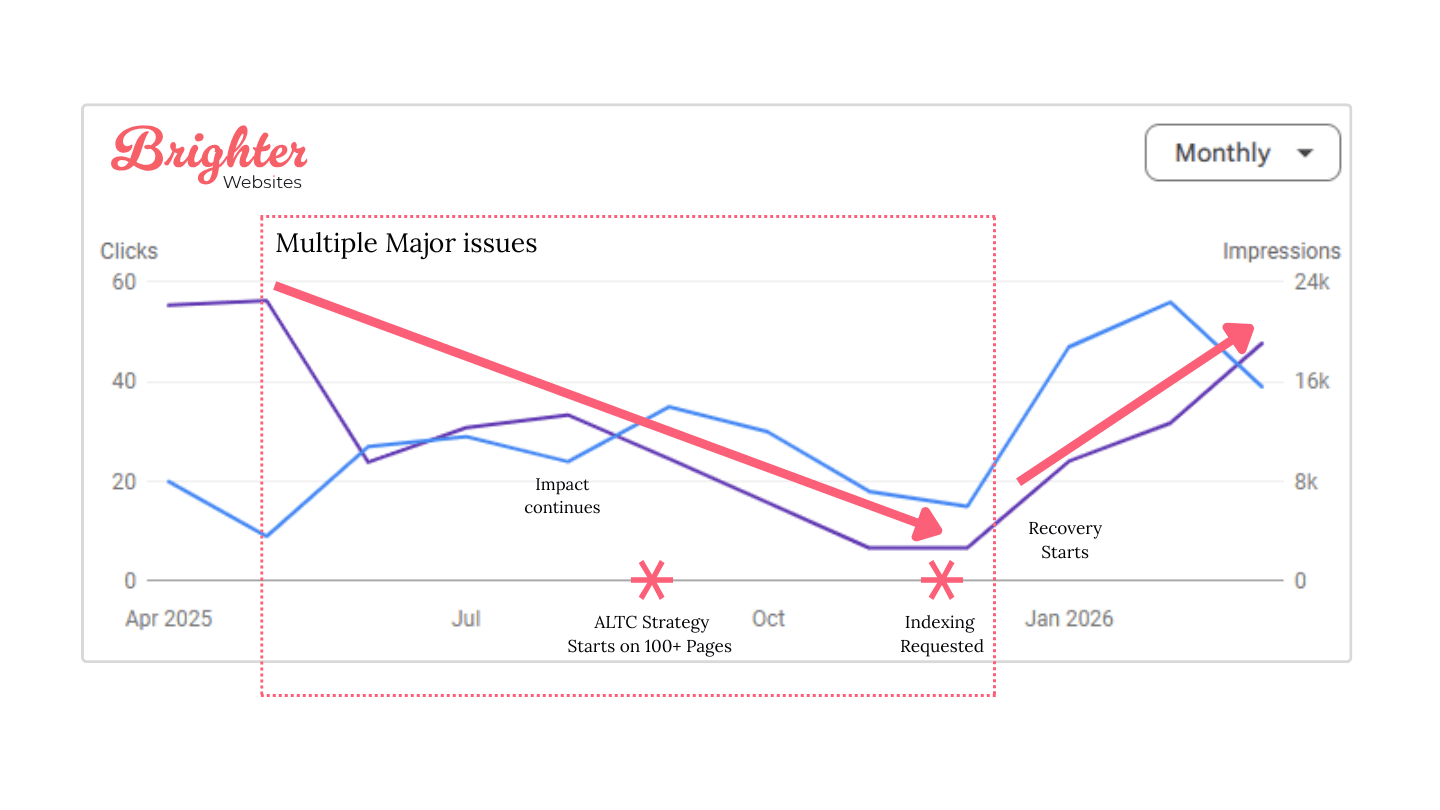
When structure aligns with claims and verification, authority consolidates faster.
Because search systems aren’t just ranking pages.
They’re resolving entities inside knowledge graphs.
If your topical hierarchy is clean and your proof is visible, your authority signal strengthens at the entity level, not just the URL level.
That’s why it compounds.
SEO is not about manipulating rankings. It is about making your information easy to retrieve and worthy of trust.
If you fake authority, it is eventually exposed. Manufactured authority wont survive scrutiny.
If someone searches for it, whether through Google, AI, voice, or whatever comes next, your knowledge needs to be:
That’s it. Quality, integrity, and structure
And it starts with getting the definition of “topic” right in the first place.
ALTC exists because the industry confused:
And that confusion creates a fragile strategy.
Structure-first SEO like ALTC is never about gaming the system. It was about building structured, resilient long-term SEO stability..
There’s a simple pattern that takes altc further
Structure, Clear taxonomy. Logical hierarchy.(this article)
Claims, Explicit positioning about what you’re qualified to speak on.
Verification, Case studies, measurable outcomes, third-party validation.
Look at the direction of search. Search engines aren’t ranking pages anymore.
They’re retrieving structured knowledge.
And the web is slowly being reorganized into something that looks suspiciously like a global Dewey Decimal system.
It’s poetic, really.
We left classification for keyword chaos.
Now we’re circling back.
SEO will keep evolving.
Algorithms will keep updating.
Tools will keep changing.
But information retrieval will always require structure.
Libraries understood that.
AI understands that.
The only long-term strategy that survives is:
Clear structure.
Explicit claims.
Demonstrated verification.
Everything else eventually gets found out.
And when it does, we all end up back where we should’ve started, with the topic.
Discover more expert insights to the latest Web Design and SEO trends, these curated blog posts are designed to broaden your horizons and spark your imagination.







Hit submit and I’ll reach out by email or phone to help you get started. Your details stay private, see the Privacy Policy.