

Product vs Service Schema: I Argued With AI, Turns Out We Were Both Half Right
Confused about Product vs Service schema? This real-world breakdown shows…

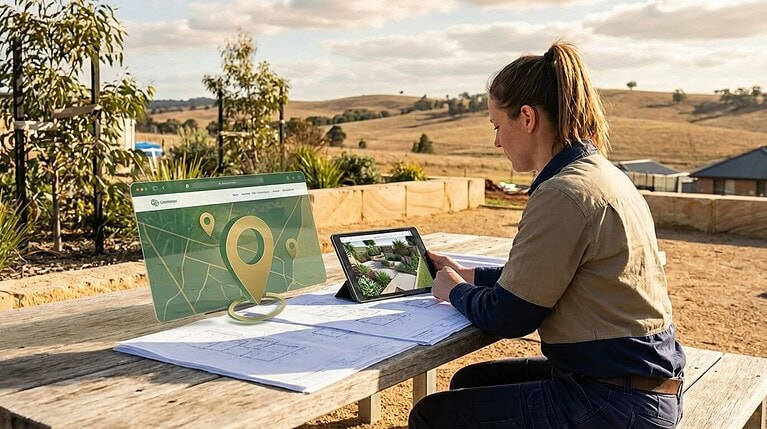
A high-performing landscape design website isn’t built around keywords, it’s built around authority, intent, and conversion. Start by defining what you want to be known for, then structure content to support real buyer decisions. The goal isn’t traffic, it’s qualified enquiries from the right clients.
Been around longer. Do better work. Still not winning jobs.
That’s usually where this starts.
The business is solid. Reputation’s there. Projects are genuinely high quality. But the enquiries? Inconsistent. Or worse, low quality.
You consider cheaper quotes. Accept wrong-fit clients. And more of your valuable time is wasted
And it’s not because your work isn’t good enough.
It’s because your website and marketing system isn’t doing its job.
Landscape design isn’t a simple service. And it definitely isn’t an impulse purchase. You’re dealing with:
No one’s clicking “buy now” on a $10-40K outdoor project.
They research. Compare. Save ideas. Talk to partners. Ask questions. Then, maybe, they enquire.
So the website has to do more than look good. It needs to:
Most don’t.: They just show photos. List services. Add a contact form.
That’s not enough.
Before SEO. Before design. Before content.
We decide: What should this business be known for?
Not loosely. Not “landscaping services”.
Specifically.
Because if that’s unclear, everything else becomes noise.
Authority positioning is the decision that defines:
It sits at the intersection of:
And here’s the part most skip:
You can’t just “claim authority“. You have to demonstrate it. Prove it & back it up over and over.

Once the position is clear, we build around it. Not with random blog posts. Not with isolated “SEO pages” chasing one keyword at a time. We define the topics that actually support the authority we’re trying to build.
That means identifying the knowledge domains this business needs to own, and then deciding how we’re going to talk about them, consistently. Here’s the simplest way to think about it.
Because a topic isn’t one page. It can be approached from different angles. Different stages of the decision process. Different types of questions.
So it doesn’t sit in just one place. It connects.
What that actually looks like:
Because search and AI increasingly, rewards recognisable expertise.
This is where most high ticket, especially landscape design websites fall apart. They treat every page like a separate attempt to rank.
One page. One keyword. One shot. No connection. No depth. No reinforcement.
We don’t do that. We build the entire site as a connected system that proves one thing, over and over:
“This business knows exactly what they’re doing in this specific space.”
SEO still matters. A lot. But it’s not the starting point. And honestly, it’s not even the main lever most people think it is.
Before we even talk SEO, this matters more. Some pages have one job.
Not ranking. Not traffic.
Converting.
Getting the right person to enquire. That means No distractions. No over-explaining. No trying to “optimise for keywords”. Just doing one job properly.
Because a page that ranks but doesn’t convert is Useless.
Yes, your site should be technically sound.
That’s baseline. Important. Necessary. But it’s only 10, 20% of the equation.
It doesn’t create demand.
It doesn’t build trust.
And it definitely doesn’t fix poor positioning.
Once positioning and structure are right, SEO becomes powerful.
But its role is specific. Your landscape design website SEO and content should:
Notice what’s missing?
“Find keywords and build pages around them.”
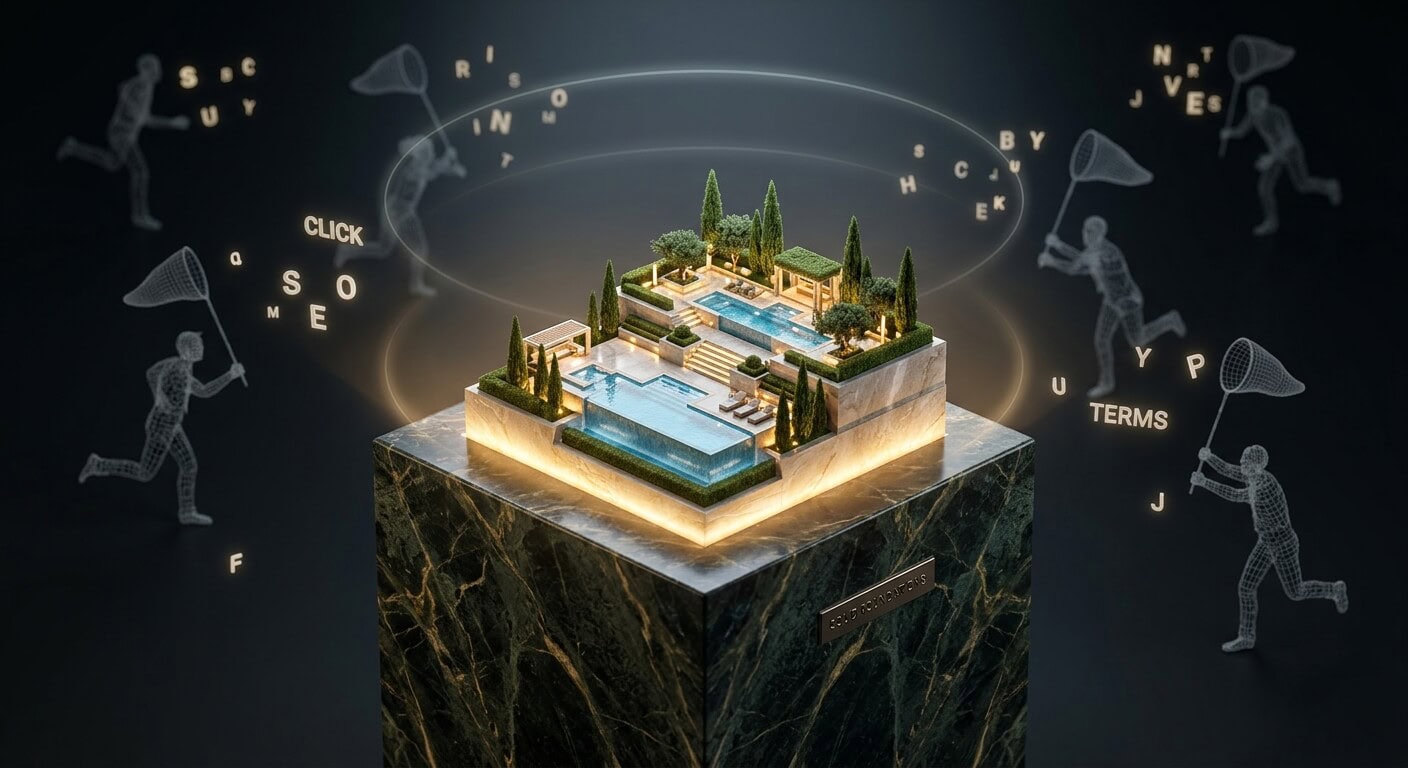
Keywords don’t lead. Intent does. And in practice, that changes everything. Because the real question isn’t what are people searching, it’s:
What are they actually trying to figure out?
Or solve. Or compare. Or decide.
Get that right, and a few things fall into place naturally:
Miss it? You can rank and still get nowhere.
This is where most web designers and SEO providers go wrong. They start with keywords.
Not the business. Not the buyer. Not the decision process. Keywords.
Which sounds logical… until you see the outcome. Pages get shaped around search terms instead of meaning. Messaging gets diluted trying to “cover variations”. Structure becomes reactive instead of intentional. And over time, the site, authority, trust and positioning drifts and dilutes.
What the business actually does becomes secondary.
Because once keywords take over, they start dictating everything, Even when it doesn’t reflect reality
That’s how you end up with pages (and similar websites) that all feel the same, saying basically the same thing… just dressed up differently to target slight keyword variations. And this is exactly why so many landscape design websites never stand out.
This is where things usually click. Because once you accept this, the whole website changes. Your Landscaping website site doesn’t need to close the sale. It needs to:
That’s it.
Not every page needs to be in the main menu. That’s a big one.
Too many options create confusion. And confusion kills enquiries.
So we prioritise:
Some pages exist purely for:
They don’t need to be front-and-centre. They just need to exist, and connect at the right moment.
The core structure usually looks like this:
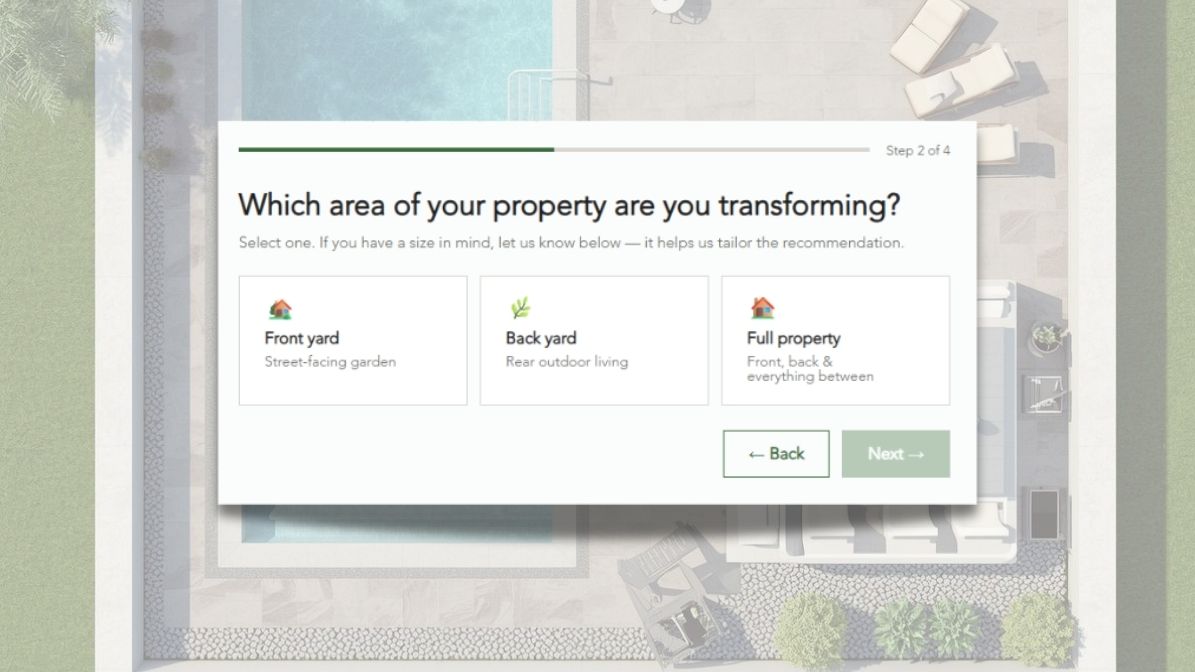
Because not every visitor knows what they need. So instead of forcing them to guess… We guide them with simple things like:
Small interactions that reduce friction. And move people toward the right next step.
Most landscaping websites treat projects like a portfolio. Don’t do this!
Yes you want Nice photos. But that’s not what builds trust.
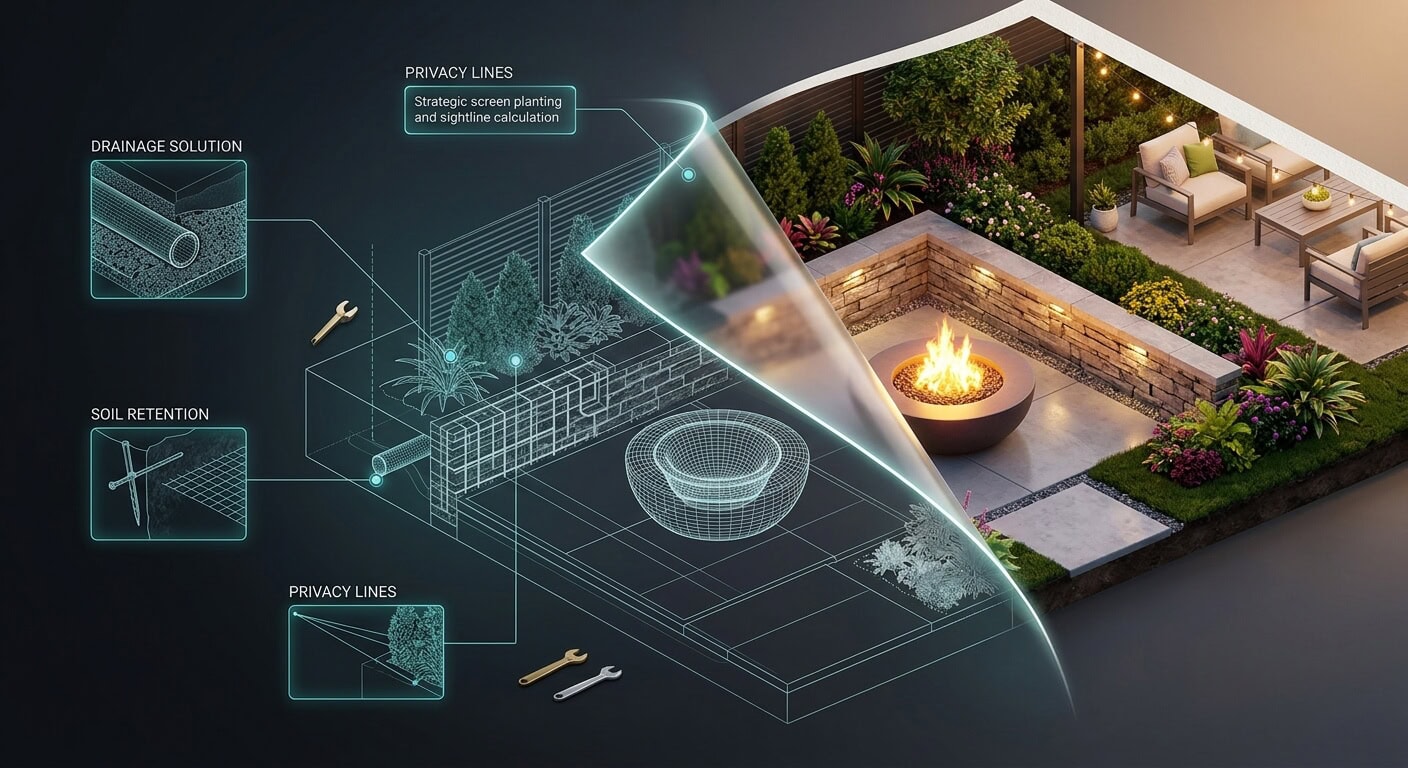
Projects need to show thinking, not just outcomes,
Add the behind the scenes and story telling aspects that really show the work came together.
That’s what serious clients are evaluating: the problem, the solution, the decisions behind it, and what it’s like to work with you.
Not just can you do it — but the how what and where of it?
We don’t build “service + location” pages. They’re usually the same content repeated with a different suburb name, Ballarat, Geelong, Melbourne. Same page, no real differentiator.
In a metro area, that approach is questionable. In a regional market like Ballarat, it falls apart completely and for a reason that goes beyond duplicate content.
It’s not just geography. It’s geography and population.
Ballarat services a catchment larger than many Melbourne suburbs combined, but with a fraction of the search volume and population density behind it.
There’s no meaningful difference between “landscape designer Ballarat” and “landscape designer Wendouree”, it’s the same person, the same problem, the same decision. Splitting pages across those terms doesn’t build local authority. It dilutes it.
And more fundamentally: if you have no physical presence in a location, and the service itself doesn’t change based on where you’re working — no different climate zone, no different council requirements, no different context — then the location isn’t a differentiator. It’s just a word on a page.
Instead, local relevance is earned through real projects in real locations, case studies grounded in actual conditions, and content that reflects the region naturally.
That builds trust. And visibility that actually holds up.

Most landscape design websites try to do everything. Show everything. Say everything. Be for everyone. And they end up doing none of it well. The better approach is simpler. But more deliberate.
And support the real sales process
When this system is in place, a few things shift gears:
Which is the goal.
If the business is solid but the website isn’t doing it justice, that’s a solvable problem. The structure is usually the problem, not your business or your work.
That’s what our Growth Package is built around. If you’re curious whether it’s the right fit, it’s worth a conversation.
Discover more expert insights to the latest Web Design and SEO trends, these curated blog posts are designed to broaden your horizons and spark your imagination.



Hit submit and I’ll reach out by email or phone to help you get started. Your details stay private, see the Privacy Policy.