

I Thought I Didn’t Come From a Business Family. I Was Wrong.
I thought I didn’t come from a business family. Turns…

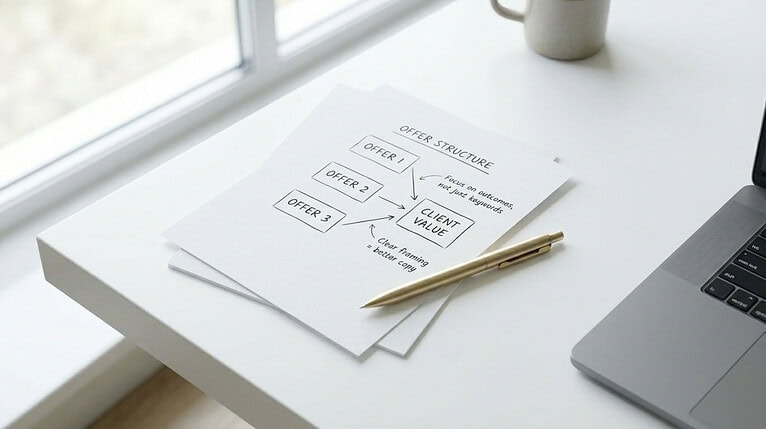
Most regional businesses waste time optimising keywords because their offer structure is broken. Rebuilding service pages around offer pathways "not product lists" helps the right buyers self-select, improves conversions, and lets keywords validate naturally. Guerrilla Steel doubled revenue with structure first, keywords unchanged.
Your website’s been live six months. No customers.
You hire an SEO consultant. “Optimize your keywords,” they say.
You spend $2,000 updating meta tags, adding keyword-rich content, tweaking H1s.
Still no customers. And you are left wondering why!
Why? Keywords can’t fix a broken offer structure.
When your service pages list what you do instead of which solution fits which customer situation, no amount of keyword optimization will make people buy. They’ll bounce because they don’t know if you’re right for them.
When businesses make this mistake, service pages list “4×4 Stables,” “5×5 Stables,” “6×6 Stables.” Customers ask: “Which one do I need?” Sales calls waste 20 minutes explaining options. Guerrilla Steel had exactly this problem before we rebuilt their service architecture.
We rebuilt around buyer situations instead. Enquiry quality jumped 47%. Revenue: $500K → $1M. Keywords unchanged.
The difference? Offer structure came first.
Most regional businesses start with listing their services, and optimising it for Google keywords. Then they hope customers can figure out what they need. When conversions don’t happen, they’re left wondering why.
A stronger approach flips the keyword first entirely. Don’t start with keywords, start with structure. Find your structure by finding your offers.
First, define your offers and service/product pathways – so they match how real buyers make decisions. entry, core, and premium options that reflect different situations. Then, build your website around those pathways. When the structure’s right, keywords start validating naturally, no forced optimisation, no guessing what Google wants.
“Want to save money building yourself?” → DIY Kits
“Need expandable, quality, fast delivery?” → Modular System Kits
“Have unique terrain or special requirements?” → Custom Engineering
With this version, customers self-select before they ever call. Discovery calls shift from exploration to validation, confirming fit, not figuring it out from scratch. Now the customer’s thought process changes completely: That’s exactly my situation. I need the second option. .
Before You Build the Website, Define the Foundation get back to the basics. Before worrying about layouts or keywords, nail down the three things that actually shape your website structure:
Once that’s clear, separate those offers into tiers — because not every customer is ready for the same thing:
Then map Buyer Pathways — how people actually move through your ecosystem:
Most businesses use only catalogue style service pages like “Web Design Services: we build custom, mobile-responsive websites.” But a pathway-based page flips it; each page speaks to a specific situation and outcome, so visitors instantly know if it’s meant for them.
Your offer architecture supports your entire website structure. It tells you:
Listed specs like “4×4 Stables,” “5×5 Stables,” “6×6 Stables.”
Customers felt confused — unsure what suited them — and sales calls turned into long explanations.
Rebuilt around real situations: DIY Builders, Busy Property Owners, Complex Projects.
Visitors instantly recognised themselves, pre-qualified before calling — and conversions rose by 35% for One Team QLD!.
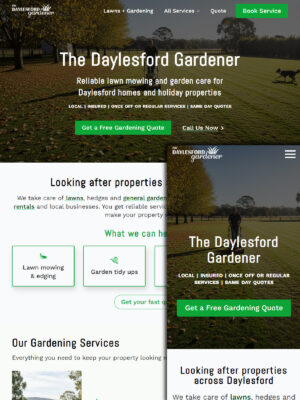
Originally launched in 2020, The Daylesford Gardener’s website has stayed #1 in Google for “Daylesford Gardening” thanks to solid SEO, schema, and content. This 2025 update focused on conversion optimisation, simplifying forms, adding trust signals, and integrating Search Console, Analytics, and Ahrefs for visibility tracking.
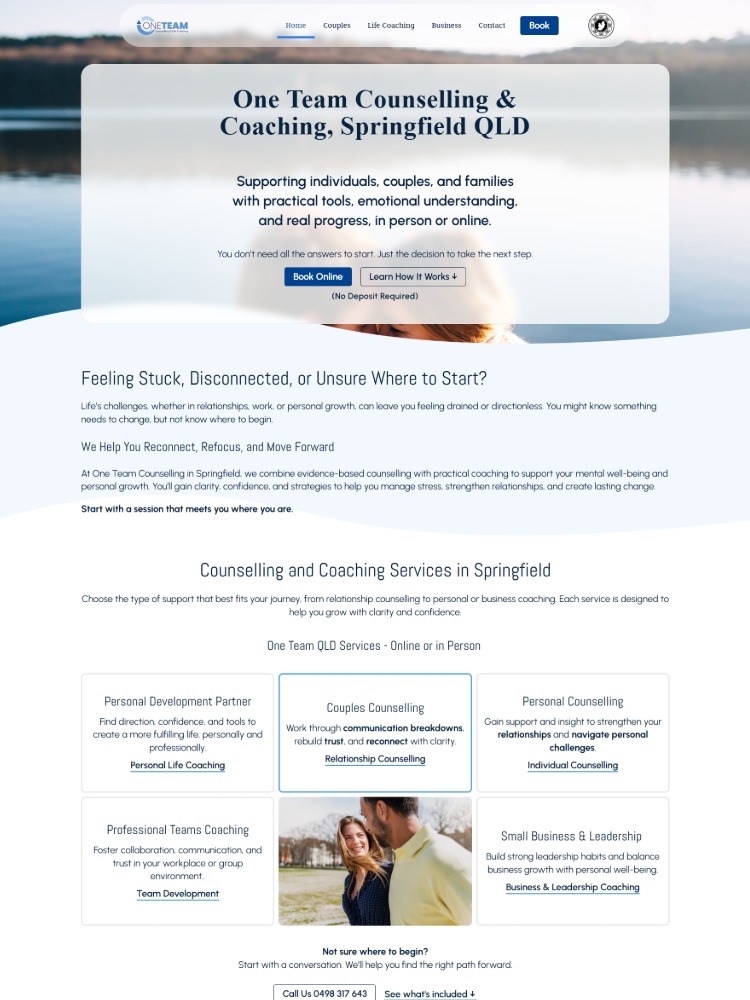
A full-service digital launch including branding, local SEO, and a user-focused WordPress site, supporting this new counselling and coaching practice to connect confidently with their local audience.
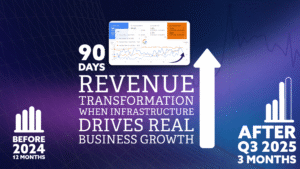
Learn how one client moved from project work to a Digital Growth Engine retainer and achieved Q3 revenue equal to six months of previous sales. Future-Proof growth confirmed.
Understand why offer structure matters: “Make an offer so good people feel stupid saying no.” When your service pathways match customer situations perfectly, buying decisions become obvious.
Get the Audio book version free on Spotify Then check out the Acquisition.com 100m Offers Free Training – There are two specific modules around Offer Creation, but Id highly recommend reading or listening to the audio book AND going through the full course. ‘
Take your catagloge view and map them to the following basic tiers.
| Entry Tier | Core/Flagship Tier | Premium Tier |
|---|---|---|
| Low friction | What most customers need | Complex/unique needs |
| Fast delivery | Strategic depth | Custom solutions |
| Budget-friendly | Primary revenue driver (60-70% of sales) | High touch / white glove service |
| Clear scope (minimal discovery) | Proven process repeatable, scalable | Premium pricing (low volume, high margin) |
Don’t organize by features. Organize by buyer needs. For a Regional Landscaping Business they might have services like:
Here’s the same Products or Services mapped to different customers needs with different constraints and outcomes.
| DIYers or Tight Budget | Professional Done for me | Large Estates with Custom Needs |
|---|---|---|
| Delivered with reusables Templates, limited customisation. Low cost and fast to deliver. | Flagship what | |
| DIY Consultation | Full Installation | Custom Landscape Architecture |
| Basic Garden Design Plant Recommendation List Install Irrigation product | Landscape design with optional irrigation system. | Custom Landscape Design with integrated Irrigation and ongoing maintenance. |
Once your offers are defined, map how customers move through your business, not just how they find you. This isn’t about the “buying journey” (awareness, consideration, decision). It’s about the lifetime pathways your customers take as they grow with you.
Each stage connects logically to the next. Your website’s structure should mirror this progression, guiding people from their first interaction to long-term collaboration.
Here’s what that looks like for Brighter Websites 👇
| Current Stage | Problem / Need | Pathway | Outcome | Next Step → |
|---|---|---|---|---|
| New Business | “I need to get established.” | Launch Pathway · Launch Website · Launch SEO | I look credible online. People can find me. | Growth Pathway |
| Growing Business | “I need customers to find and choose me first.” | Growth Pathway · Growth Website · Growth SEO · Social Amplification | My brand is visible and trusted. When people search, they find me first. | Scale Pathway |
| Scaling Business | “I need consistent, qualified leads and more of them.” | Scale Pathway · Conversion · Systems Automation | I have predictable, measurable lead flow. | Custom / Collaboration |
| Mature Business | “I want continuous optimisation no wasted spend on what’s already working.” | Custom Partnerships / Consulting | I get targeted improvements and strategic growth support. | Ongoing Collaboration Loop |
It’s not that you shouldn’t have a page dedicated to a specific product, like Website Design – when it makes sense. It’s about helping customers quickly identify what they actually need.
If someone lands on your Website Design page, don’t stop at describing features. Show them the three service pathways Launch, Growth, and Scale. Each pathway represents a clear situation, outcome, and starting point. Visitors can instantly see which stage fits their business.
Depending on your market, the structure can flex. Low competition markets, you might show the pathways clearly on your main service page. In competitive markets, add landing pages for each tier outlining what’s included and who it’s for. Its helpful for Paid Ad optimised landing pages and it gives you the best of both worlds: one strong SEO page, supported by pages that help decision making.
Learn how to structure high-converting service pages → knowledge base – service page structure
Or generate yours fast → try the GPT

Your service page’s job isn’t to rank for every keyword, it’s to convert. Let your supporting content handle the ranking and authority signals. Use other pages to amplify reach and reinforce trust:
Build outward from your offer your service page converts; your supporting content attracts and qualifies.
Traditional SEO logic still assumes the customer knows what they need that every service is equally relevant and that rankings automatically equal conversions.
In reality, especially in regional markets, it’s the opposite.
Customers are unsure which service fits their situation. That uncertainty leads to wasted discovery calls, mismatched enquiries, and high bounce rates even if you’re ranking well.
When you design your website around offer pathways instead of keywords, everything changes:
Proof in practice: Guerrilla Steel didn’t change a single keyword. They just reorganized their service structure and doubled their revenue.
Skip offer structure, and everything downstream breaks. You’ll still get traffic, but it won’t convert. Fixing it later means rewriting URLs, reworking links, and losing rankings, all because the foundation wasn’t built for how customers actually buy. Keyword rankings will follow later but your conversions will start from day one.
If you’re rebuilding your website, start with structure. Map your service tiers, define buyer pathways, and build pages around real situations, not features. If your current site isn’t converting, the offer structure’s likely the problem. Customers can’t see which service fits them.
If your site is slow, outdated or your content doesn’t show your expertise …
it’s losing business. Let’s fix that.
Discover more expert insights to the latest Web Design and SEO trends, these curated blog posts are designed to broaden your horizons and spark your imagination.





Hit submit and I’ll reach out by email or phone to help you get started. Your details stay private, see the Privacy Policy.